 Xingge
Qi Sha and Po Jun: the General and the Breaker
One charges ahead, the other tears down and starts again · 4 min
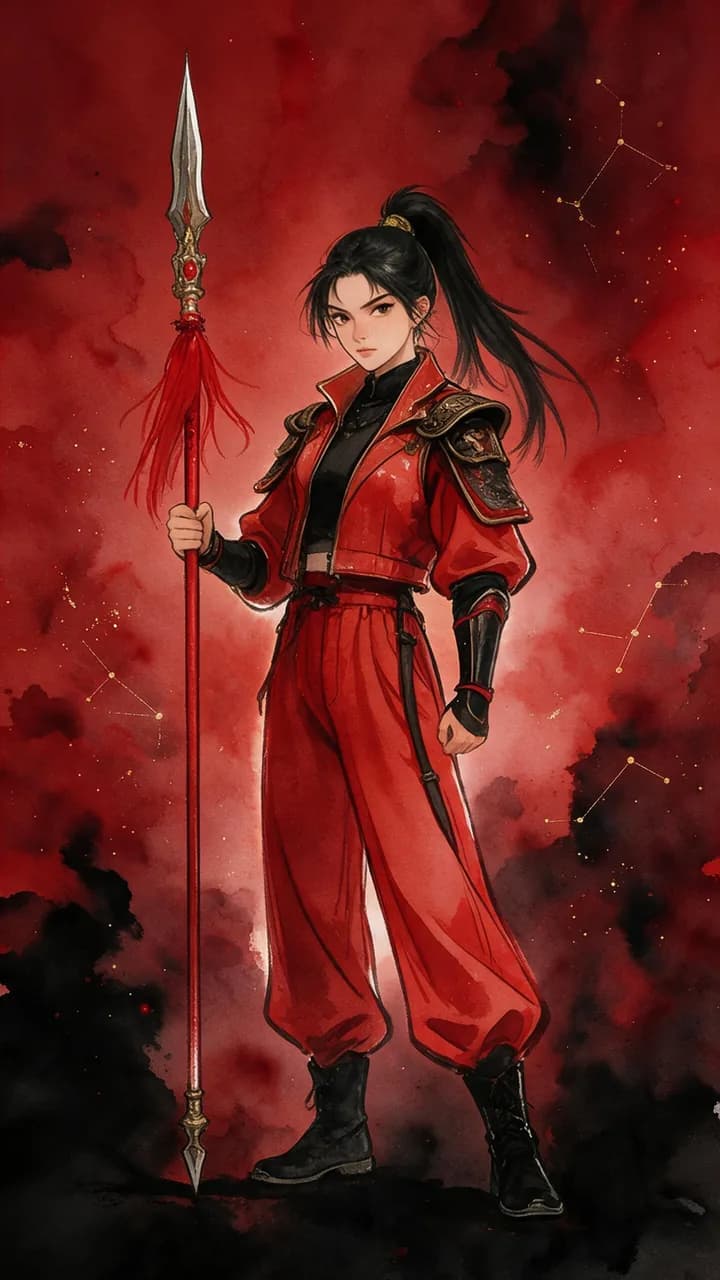
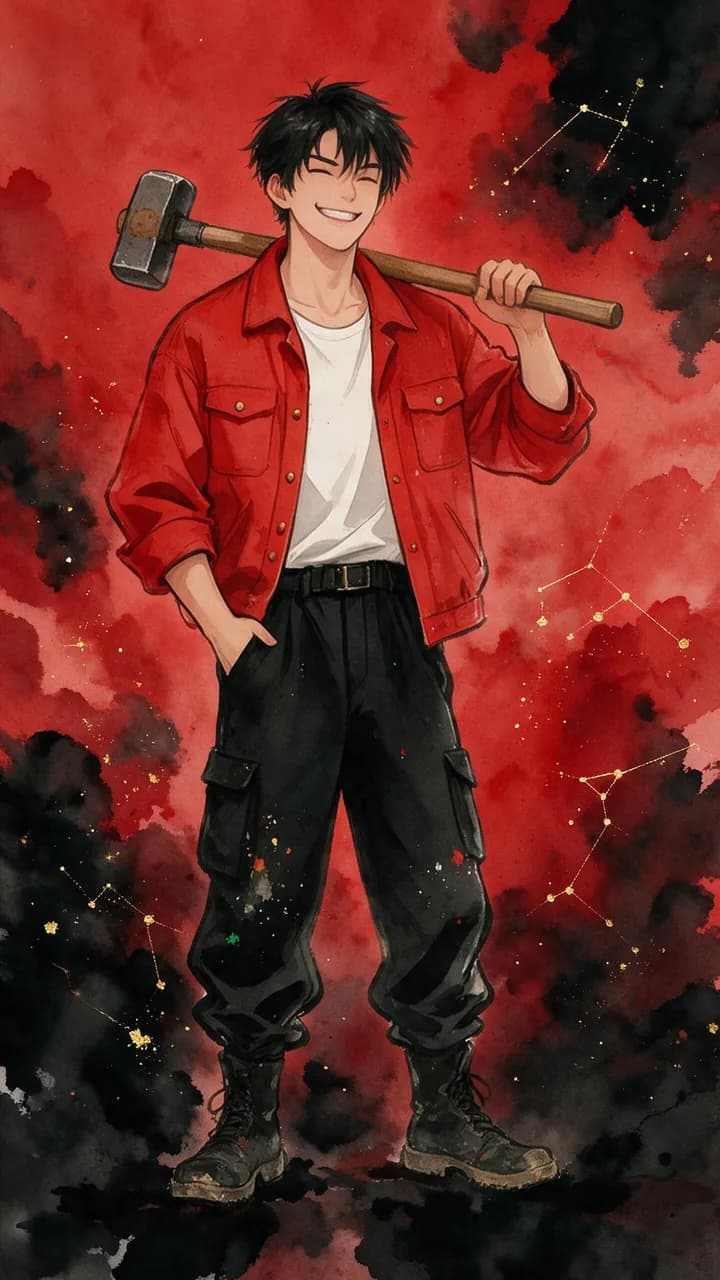
A Qi Sha that never falls
On the brightness table Xingge uses, Qi Sha has no Xian position. Whichever cell it sits in, it has strength.Neither of this lesson's stars sticks to the script, but a lot of new things start in their hands.
Qi Sha: the General
Qi Sha is the top general of the Dipper: independent and decisive. A friend with a strong Qi Sha is used to carrying problems alone. While everyone is still discussing, they've already started, and they don't always wait for others to catch up.
Po Jun: tear it down and start again
Po Jun transforms into Consumption, never content with things as they are. A friend with a strong Po Jun can't stand the old for long: they rearrange their whole room every few months, change careers when work goes stale, and love starting from zero.
Consumption is the cost of change
Po Jun's "Consumption" isn't waste; it's the cost you pay for change.Tearing down and rebuilding always takes effort. Whether it was worth it depends on what gets built in the end.
The Sha Po Lang triangle
Qi Sha, Po Jun and Tan Lang are always four cells apart on the chart, in each other's San Fang Si Zheng.With one of them in the Life Palace, the other two are in Wealth and Career. This set is called Sha Po Lang.
Qi Sha is the top general of the Dipper; meeting Zi Wei, it turns to authority and brings blessing.
In plain wordsQi Sha is the top general of Dou Shu. When it meets Zi Wei, its drive turns into the power to take control of a situation.
Where Qi Sha and Po Jun are for you
The rooms these two sit in are where you most want to charge ahead and change things. Tan Lang is usually at the third corner.
Qi Sha is in your Friends Palace, and Po Jun is in your Children Palace.
- Qi Sha
- Friends Palace (Zi) · Wang
- Po Jun
- Children Palace (Chen) · Wang
This is a sample chart. Enter your birth details and this card switches to your own chart. Draw a chart ›
How are Qi Sha, Po Jun and Tan Lang positioned relative to each other?
- Always in each other's San Fang Si Zheng
- Always in the same cell
- Not related at all
See answer
Always in each other's San Fang Si Zheng
The three are four cells apart, forming a triangle. That's Sha Po Lang.
Dare to start over, and count the cost too.
Deeper reading
Qi Sha: the top general of the Dipper
The *Quan Shu* calls Qi Sha "the top general of the Dipper" and says it "meeting Zi Wei, turns to authority and brings blessing". Practitioners tend to read people with Qi Sha in the Life Palace as independent, decisive and quick to act, used to carrying and charging at problems alone without waiting for others. Qi Sha's challenge is "before you charge, check the map": drive is a gift, and pointed the right way, it makes you the one who clears the path.
Qi Sha always sits directly opposite Tian Fu. One charges, one guards; one is the general, the other the steward. When you read Qi Sha, glance at Tian Fu across the way to see whether there's backup once it charges out. Zi Wei and Qi Sha share a palace in Si and Hai, and the ancients said that when Qi Sha meets the emperor, its fierceness turns into authority.
Does Qi Sha have a fallen position at all?
On the brightness table Xingge uses, Qi Sha is Miao in Yin, Shen, Chen, Xu, Chou and Wei; Wang in Zi, Wu, Mao and You; Ping in Si and Hai; and never Xian. When volume three lists brightness star by star, it also writes "Ping in Si and Hai" and "no fall".
But volume one of the same book quotes "Qi Sha in fallen ground, brooding, fortune does not arise", and the song of Qi Sha says "Sha in fallen ground is hard to speak of". The same book contradicts itself, and later schools each made their own choices. Xingge follows the volume-two table, where Qi Sha's dimmest is Ping. In practice, practitioners look less at Qi Sha's brightness and more at whether it has stars like Zi Wei or Lu Cun beside it that can "rein it in".
The song of Qi Sha also says "Qi Sha in Yin, Shen, Zi or Wu: the four barbarians bow to the hero", which volume three calls the "Qi Sha facing the Dipper" pattern: in these four cells, Tian Fu is opposite, and in Yin and Shen it's Zi Wei and Tian Fu together. The general faces the emperor, and its drive finds a direction.
Po Jun: transforms into Consumption
Po Jun is "the seventh star of the Northern Dipper". The *Quan Shu* says "in the heavens it is killing energy, in the chart a star of consumption, so its Hua Qi is Consumption". Consumption isn't waste; it's the cost of change: tearing down and rebuilding always takes effort and resources. Practitioners tend to read people with Po Jun in the Life Palace as restless with the status quo, bold in reform and fond of starting from zero, who also need to learn to estimate the cost of each fresh start. Think of moving house: a Po Jun person moves whenever they feel like it, but the deposit, the agent's fee and the time it takes to settle in all have to be counted too.
Po Jun is brightest (Miao) in Zi and Wu, which the *Quan Shu* also notes as "in Zi or Wu, entering the temple", and at Xian in Mao and You. The *Quan Shu* also says "only Tian Liang can restrain its harshness, and Lu can ease its wildness": with the steady Tian Liang and some Lu beside it, Po Jun's urge to tear down has someone on the brakes and resources to back it.
Po Jun always sits directly opposite Tian Xiang: one wants to tear down, the other wants to keep order, and the two often hold each other back.
Sha Po Lang
By the rules for placing the stars, Tan Lang, Qi Sha and Po Jun are four cells apart within the Tian Fu group, so they're always in each other's San Fang Si Zheng. With one of them in the Life Palace, the other two are in the Wealth and Career Palaces. This set is called Sha Po Lang, a life rhythm of change and pioneering: switching careers, breaking new ground, doing what no one else has done. Chapter 5 goes into more detail.
A note on the transformations
By the transformation rhyme in volume two of the *Quan Shu*, Po Jun takes Hua Lu in Gui years and Hua Quan in Jia years. The *Quan Shu* says Po Jun "only for those born in Gui or Jia years fits the pattern of wealth and rank", exactly the two years in which it takes Hua Lu and Hua Quan. Qi Sha takes no part in the transformations; like Tian Xiang, it's absent from the table, and its strength mostly comes straight from itself and the stars beside it.
Terms in this lesson
- Qi Sha
- The general star: independent and driven, quick to decide and willing to go all in.
- Po Jun
- Break first, then build: restless with the status quo, tears down to rebuild, and spends a lot of energy doing it.
- San Fang Si Zheng
- The palace, its opposite and its two trine palaces. Read the four together for the full picture.
- Sha Po Lang
- Qi Sha, Po Jun and Tan Lang always meet in each other's trines: a life rhythm of change and pioneering.