 Xingge
Tian Tong and Ju Men: the Sunshine and the Debater
One lightens the mood, the other digs deeper · 4 min

What's for dinner
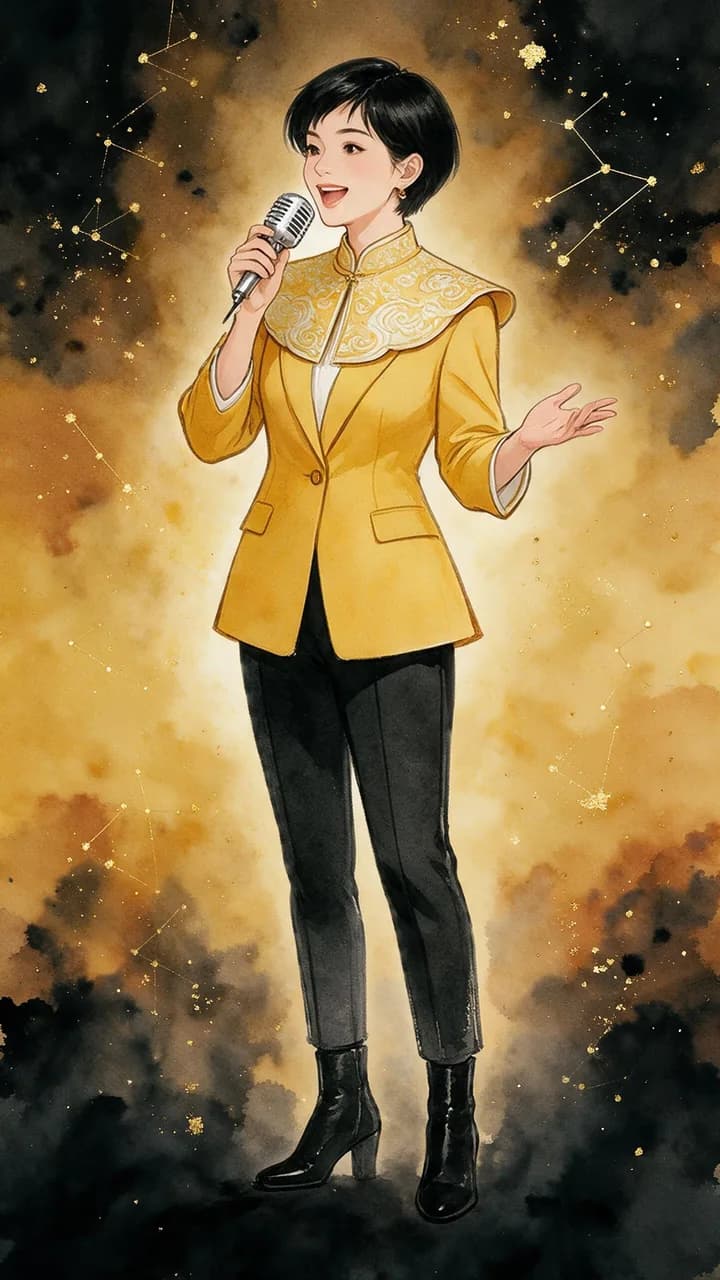
"Anything's fine." That's Tian Tong's usual answer.Ju Men is more likely to add: "Didn't we wait forever at that place last time?"One of this lesson's stars makes things lighter; the other makes things clearer.
Tian Tong: the star of blessing
Tian Tong transforms into Blessing: easygoing, soft-hearted and good at enjoying life. A friend with a strong Tian Tong rarely clashes with anyone, and their ideal weekend is plenty of sleep and good food.Too much comfort can leave them drifting. Once they find something they truly love, they have plenty of drive.
Ju Men: the star of speech
Ju Men transforms into the Hidden: always asking why, and analyzing deeply. A friend with a strong Ju Men checks the source of a news story first, and often says "Wait, that's not right" mid-conversation.Their words carry weight, and they can stir up debate.
Hidden doesn't mean dark
Ju Men's "Hidden" isn't a bad thing. It means seeing the shadows.Where others see no problem, Ju Men doubts first and only believes once it has checked.
Tian Tong and Ju Men together
Tian Tong belongs to Zi Wei's team and Ju Men to Tian Fu's. The two share a palace in Chou and Wei.In the same person, one voice says "oh, let it go" and the other says "no, we need to ask", and they take turns.
In all twelve palaces it is read as blessing.
In plain wordsWhichever cell Tian Tong sits in, the ancients read it toward good fortune. It's famous for its good temper.
Where Tian Tong and Ju Men are for you
In the room where Tian Tong sits, you go with the flow; in the room where Ju Men sits, you want to get to the bottom of things.
Tian Tong is in your Spouse Palace, and Ju Men is in your Fortune Palace.
- Tian Tong
- Spouse Palace (Si) · Miao
- Ju Men
- Fortune Palace (You) · Miao · Hua Lu
This is a sample chart. Enter your birth details and this card switches to your own chart. Draw a chart ›
Ju Men "transforms into the Hidden". What's that closest to?
- Seeing what others don't notice
- A gloomy personality
- Only liking to go out at night
See answer
Seeing what others don't notice
Hidden means seeing shadows and gaps, which is why Ju Men loves to question and dig deep.
Easing off and digging in can take turns.
Deeper reading
Tian Tong: transforms into Blessing
The *Quan Shu* calls Tian Tong "master of the Fortune Palace", gives it the Hua Qi of Blessing, and says that "in all twelve palaces it is read as blessing". Practitioners tend to read people with Tian Tong in the Life Palace as easygoing, easy to get along with and soft-hearted, people who know how to enjoy life and keep a childlike heart.
The *Quan Shu* also says Tian Tong "has a quick mind without being overbearing", and that it "does not mind Qi Sha's intrusion, nor fear sharing a palace with the challenging stars". Clever but not agitated, and not much affected by confrontational stars. Think of an argument: it isn't that Tian Tong people don't get it; they just don't think it's worth falling out over.
Tian Tong's blessing is often "hardship first, comfort later": you may take a detour or two when young, and get better at making yourself comfortable as you go. Its challenge lies here too: with too much comfort it's easy to drift, and once Tian Tong finds something it truly loves, it has plenty of drive.
Ju Men: transforms into the Hidden
Ju Men is "the second star of the Northern Dipper". The *Quan Shu* calls it "a star of yin essence, whose Hua Qi is the Hidden". Hidden doesn't mean darkness; it's closer to "seeing the shadows": where others see no problem, Ju Men doubts first, asks first, and only believes once it has checked.
That makes Ju Men well suited to work that needs analysis and expression: research, debate, teaching, criticism, broadcasting. The *Quan Shu*'s description of Ju Men leans severe, saying that "in Body or Life it brings a lifetime of disputes". In plain terms: its words carry weight and can easily stir up debate. If Ju Men asks itself before speaking, "am I trying to solve the problem, or to win?", it can put its eloquence where it counts.
The "Dou Shu Zhun Sheng" has a very fair line: "Ju Men is a harsh star, and especially fine when it gains its position." A star the ancients saw as harsh becomes especially good when it's in the right position.
Ju Men needs light
Ju Men is the Hidden, and what it needs most is Tai Yang. Volume three of the *Quan Shu* lists several Ju Men and Tai Yang combinations: "Ju Men in Hai with the sun in Si: fed by office and widely known"; the reverse, "Ju Men in Si with the sun in Hai, is not as good". The only difference is whether the sun is bright: Tai Yang in Si is Wang, and in Hai it's at Xian. When reading Ju Men, glance at where Tai Yang is and how bright it is; it often tells you more than Ju Men itself.
Ju Men also has a famous combination in Zi and Wu, which volume three writes as "Ju Men in Zi or Wu with Ke, Quan and Lu: jade hidden in stone, flourishing fortune": like jade hidden in rock, it needs Hua Lu, Hua Quan or Hua Ke to be polished out. Chapter 5 comes back to it.
Dim cells, the right transformations
Tian Tong is at Xian in Wu, and Ju Men at Xian in Chen and Xu. But the "Gu Sui Fu" in the *Quan Shu* has two intriguing lines: "Tian Tong in Xu is turned away, yet for a Ding-year person transforming well, it brings great nobility", and "Ju Men in Chen or Xu is fallen ground, yet for a Xin-year person transforming well, wealth stands tall". In Ding years Tian Tong takes Hua Quan, and in Xin years Ju Men takes Hua Lu: a star in a poor position meets the right transformation and turns things around. It's a good example of why brightness and the transformations have to be read together.
Tong Ju, a pair
Tian Tong belongs to the Zi Wei group and Ju Men to the Tian Fu group; the two share a palace in Chou and Wei, and both are at Bu there. One wants to relax, the other wants to dig deep, so the same person often hears two voices: one saying "oh, let it go", the other "no, we need to ask". Learn to let the two voices take turns, and you're easy company when it's time to relax and deep when it's time to be serious.
A note on the transformations
By the transformation rhyme in volume two of the *Quan Shu*, Tian Tong takes Hua Lu in Bing years, Hua Quan in Ding years and Hua Ji in Geng years; Ju Men takes Hua Lu in Xin years, Hua Quan in Gui years and Hua Ji in Ding years. For someone born in a Ding year with Tian Tong and Ju Men sharing a palace, one star takes Hua Quan and the other Hua Ji in the same cell, which practitioners often read as: saying "whatever" out loud while quietly calculating the whole time.
Terms in this lesson
- Tian Tong
- The star of contentment: easygoing, soft-hearted and fond of comfort; often hard work first, sweetness later.
- Ju Men
- The star of speech: always asking why, sharply analytical; words carry weight and can stir up disputes.