 Xingge
Helpful and challenging stars aren't good and bad
The supporting cast have extreme names, but their roles are many-sided · 3 min
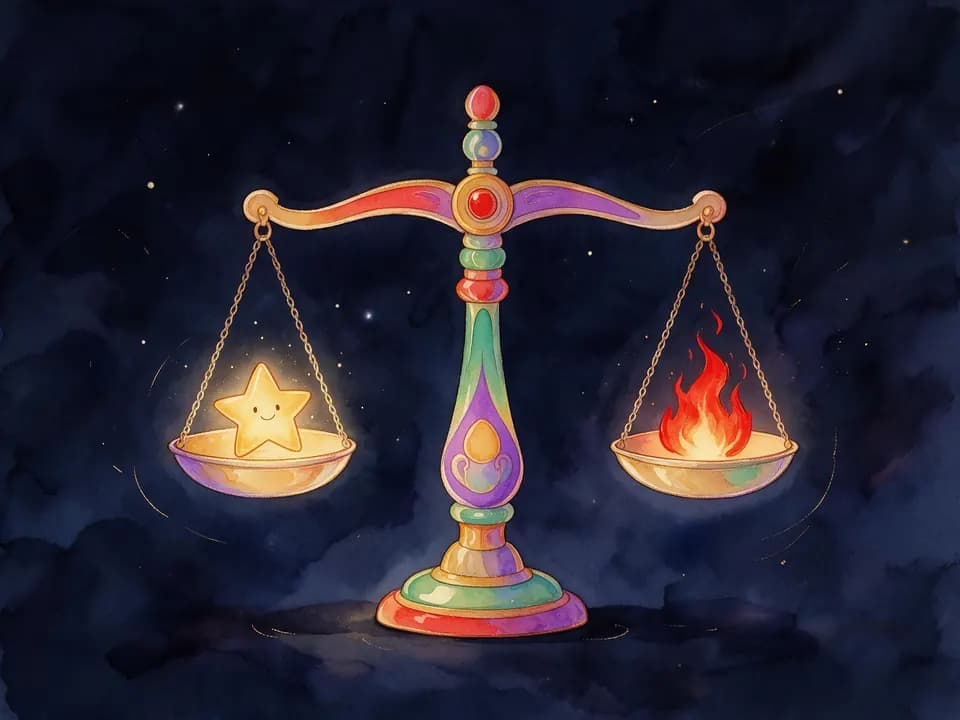
Every chart has challenging stars
Qing Yang, Tuo Luo, Huo Xing, Ling Xing, Di Kong and Di Jie: these six challenging stars appear on every single chart, no exceptions.So there's no need to panic at the label. This lesson makes one point: helpful doesn't mean good, and challenging doesn't mean bad.
Auxiliary stars are the supporting cast
A cell's basic tone is set by its main star. Auxiliary stars add to the main star and adjust how it shows up.The same Wen Chang reads quite differently next to Tai Yang than next to Ju Men.
Two kinds of supporting cast
The noble person's chart also has Qing Yang, Tuo Luo, Huo Xing and Ling Xing; how could the petty person's chart lack Ke, Lu and Quan?
In plain wordsThe ancients warned long ago: even the most upright person has Qing Yang, Tuo Luo, Huo Xing and Ling Xing on their chart, and even the most ordinary person has Hua Ke, Hua Lu and Hua Quan.You can't draw a conclusion from one star.
Lots of help can mean less practice
People with many helpful stars often have someone to catch them, but they also get fewer chances to push through on their own.People with many challenging stars face more pressure, but once they've carried it, the skills they've built are their own.
Combinations matter more than single stars
When practitioners read an auxiliary star, they don't look at it alone. They also look at which main star it shares a palace with, which cell it sits in, and whether the main star's brightness can carry it.Only together do these tell you what it means.
The supporting cast in your Life Palace
Look at the "Auxiliary stars" row: those are the supporting cast living with your main star.Having none is common too; then the main star carries it alone.
Your Life Palace is in Wei, home to Tai Yang and Tai Yin.
- Main stars
- Tai Yang (De) Hua Quan, Tai Yin (Bu)
- Auxiliary stars
- Zuo Fu, You Bi
- Minor stars
- Fei Lian
This is a sample chart. Enter your birth details and this card switches to your own chart. Draw a chart ›
How do practitioners read a chart with many challenging stars?
- More pressure, and often more ability built from it
- This person is simply unlucky
- Find a way to move the stars away
See answer
More pressure, and often more ability built from it
Challenging stars bring pressure, and drive with it. Practitioners look at where that energy goes, not how many there are.
Don't be scared off by a name. Look at who it sits with.
Deeper reading
Fourteen supporting stars
Beyond the fourteen main stars, the ones most often discussed are the fourteen auxiliary stars:
- Six Auspicious Stars: Zuo Fu, You Bi, Wen Chang, Wen Qu, Tian Kui and Tian Yue.
- Six Malefic Stars: Qing Yang, Tuo Luo, Huo Xing, Ling Xing, Di Kong and Di Jie.
- Lu Cun and Tian Ma: one governs wealth energy and the other movement; the last lesson of this chapter covers them in detail.
The main star decides "what kind of person, what kind of matter" a cell is about; the auxiliary stars decide how it shows up. Think of work: the main star is like your job title, and the auxiliary stars are like the resources and pressures you're handed. Two team leads with the same title look very different if one gets capable teammates and the other gets difficult clients.
The classics call them the "four killers"
The *Quan Shu* itself more often says "the four killers", with a note: "as when meeting the four killers (Qing Yang, Tuo Luo, Huo Xing and Ling Xing)". Di Kong and Di Jie form a separate pair, which the *Quan Shu* writes as "Tian Kong" and "Di Jie", with a section of their own, "What Do Tian Kong and Di Jie Govern?". Grouping all six as the "Six Malefic Stars" is a later arrangement, to make them easy to remember and to pair them with the Six Auspicious Stars. Xingge uses the Six Malefic Stars label too; when you see "the four killers" in the classics, it means the first four.
The names are extreme; the original text isn't
The ancients named things bluntly: stars that help and make things smoother were called helpful, and those that bring pressure, conflict and back-and-forth were called challenging. But the "Supplement to the Tai Wei Fu" says "the noble person's chart also has Qing Yang, Tuo Luo, Huo Xing and Ling Xing; how could the petty person's chart lack Ke, Lu and Quan?": the upright have challenging stars too, and ordinary people have helpful ones.
The *Quan Shu* writes about Qing Yang in two ways as well. In the same passage, it first says that guarding Body or Life it is "rough by nature and violent in conduct", then goes on: "entering the temple, it is firm and decisive, strategic and brave, and governs power and rank". In the right position it's decisive, strategic and willing to take responsibility; only in the wrong position does it become hot-tempered and quick to lock horns. On Di Kong and Di Jie it's even more direct: "meeting good, it is good; meeting bad, it is bad". Whether it helps depends on who's beside it.
Helpful stars come with conditions too. The rhyme for Zuo Fu and You Bi says "without a ruler they are of no use": with no worthy main star beside them to support, the assistants can't put their strength to work.
Three common misunderstandings
- Many challenging stars means a bad chart. Charts with many challenging stars often show more pressure and more ups and downs, and just as often belong to people who can carry a load and think fast. Practitioners look at where that energy goes.
- The more helpful stars, the better. With many helpful stars, someone often catches you, and you get fewer chances to push through yourself. Some people are looked after all the way to thirty, and the first time they hit an obstacle with no one to help, they panic most.
- You can dodge challenging stars. The stars are set at birth; there's no moving them. What you can do is know which cell the pressure will show up in, and prepare.
The order for reading auxiliary stars
- First look at the main star and its brightness. With a strong main star, the supporting cast are a bonus; with a weak one, their influence shows more.
- Then see which cell the auxiliary star sits in. The same Qing Yang in the Career Palace means loving competition and wanting to win at work; in the Spouse Palace, it means speaking directly in love, with no beating around the bush.
- Finally, look at pairs. The Six Auspicious and Six Malefic Stars all come in pairs, and their strength is most concentrated when a pair shares a palace, faces each other, or flanks a cell from either side. For example, Qing Yang and Tuo Luo flanking the Life Palace was read by the ancients as pressure from both sides; Zuo Fu and You Bi flanking the Life Palace means support on both sides.
Stars aren't good or bad; it's all about where they're put to use.
Terms in this lesson
- main star
- The fourteen weightiest stars. They set a palace's basic character, like the owner of a room.
- auxiliary star
- The Six Auspicious and Six Malefic Stars plus Lu Cun and Tian Ma, which add help or tests to the main stars.
- brightness
- How well a star performs in a given cell: Miao and Wang are strongest, Xian is the most awkward.
- Six Auspicious Stars
- Zuo Fu and You Bi, Wen Chang and Wen Qu, Tian Kui and Tian Yue: three pairs of helper stars.
- Six Malefic Stars
- Qing Yang and Tuo Luo, Huo Xing and Ling Xing, Di Kong and Di Jie: three pairs of challenging stars that become drive when used well.